Editor’s note: I hope to continue to share my writing, though most of my time/energy is spent at Kingstonist. As such, I will be publishing some of my articles here after some time has elapsed from the original publication date. This piece was published on Kingstonist in May 2025. The Neighbourhood Tree Planting Program (NTPP) is running again for 2026.
For the past four years, the City of Kingston has been offering low-cost trees to Kingston residents, in an effort to increase the City’s tree canopy and keep Kingston on the way to being “Canada’s Most Sustainable City”.
Now that the first round of trees purchased this year has been picked up by homeowners, I caught up with Marty Mayberry, Supervisor of Forestry for the City of Kingston, to see just how that initiative is working out.
The low-cost trees are part of the Neighbourhood Tree Planting Program (NTPP), which Mayberry said has sold over 14,000 trees to date in the City. The program began in 2021 with only one sales period in the spring.
“We quickly realized how popular this program would be when the trees sold out in seven days. The program was expanded to two sales per year, [with] each [sale] making 1,800 trees available to residents (3,600/year). We have continued to sell out each sale, equating to approximately 14,400 trees sold to date,” Mayberry shared.
Over the years, the species available to purchase have changed based on the volume sold. Mayberry said that Autumn Blaze Maple, Serviceberry, Sugar Maple, and the two apple varieties (Macintosh and Cortland) continue to be the most popular choices.
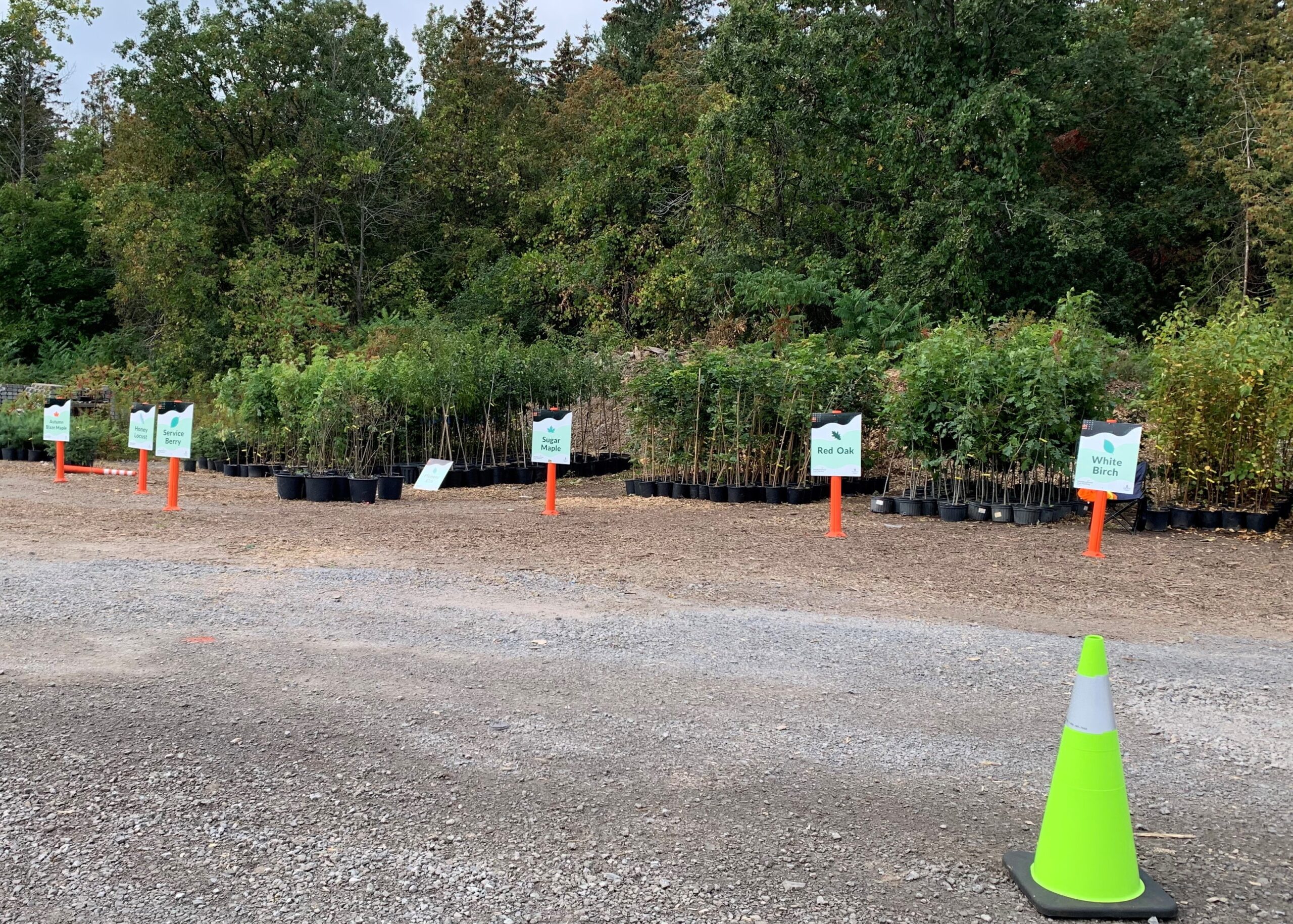
With what we hope is the end of the colder months now upon us, these trees – along with other plants and shrubs on Kingston-area properties – will need care and watering to flourish successfully.
Keeping in mind that watering restrictions come into effect annually in mid-June and continue until mid-September, young trees need frequent and deep watering to grow and thrive.
A few years ago, my family had a tree replaced by the City in our front yard. The following year, the sapling lost all its leaves in July, so I reached out to the City to ask what I could be doing to support this poor little tree. An arborist came to evaluate the situation and told me the tree was alive and well, but the dry summer had caused it to prematurely drop its leaves. They suggested watering deeply with a large bucketful of water every other day during the dry spells.
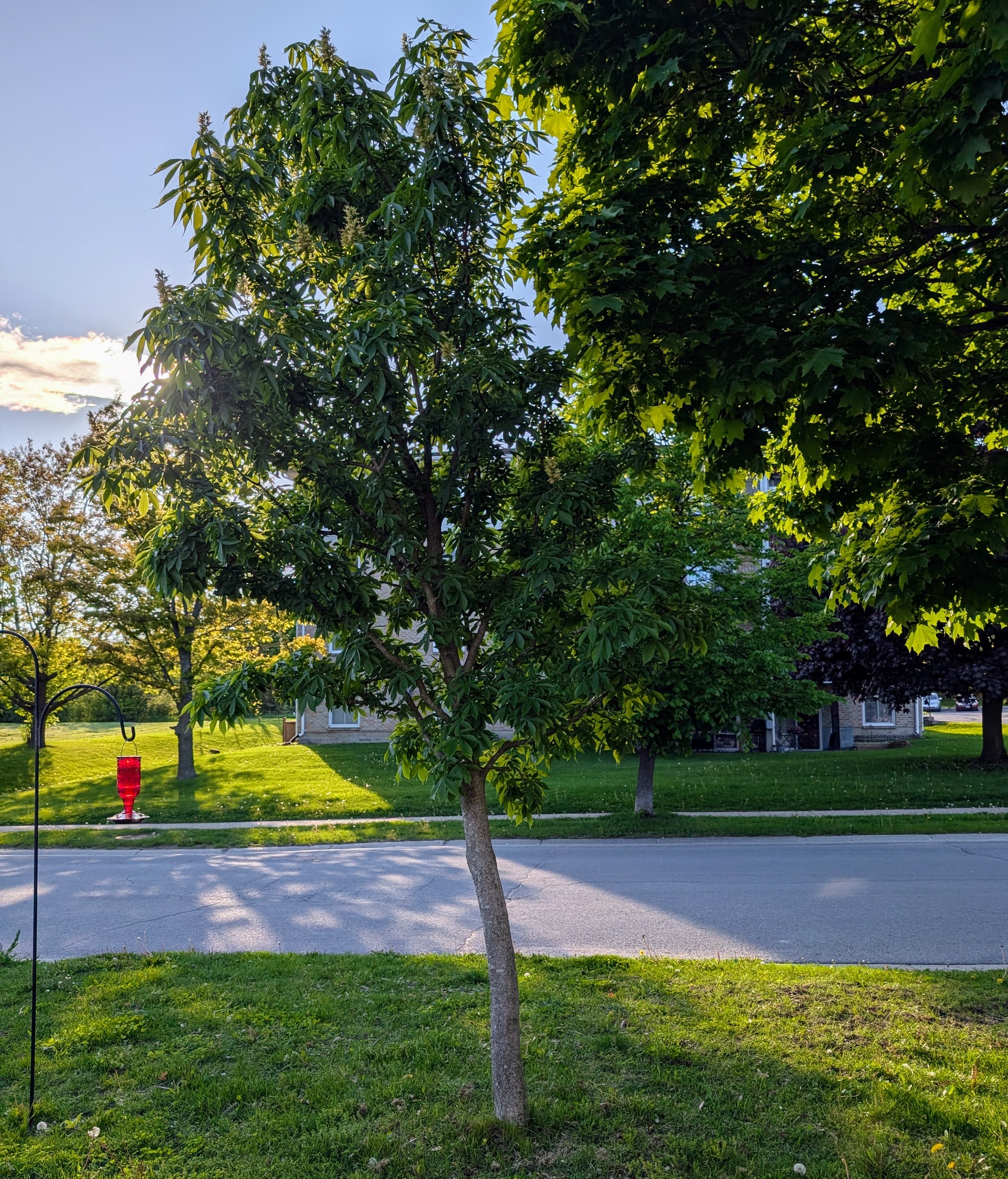
That tree is now thriving (though it’s growing a bit crookedly to avoid being under the canopy of the neighbour’s much-older maple tree), and I rarely water it anymore, but for a few years I had to monitor the tree the same way I watched and watered my gardens – frequently!
Mayberry provided the following advice for those who have purchased and planted a sapling this year:
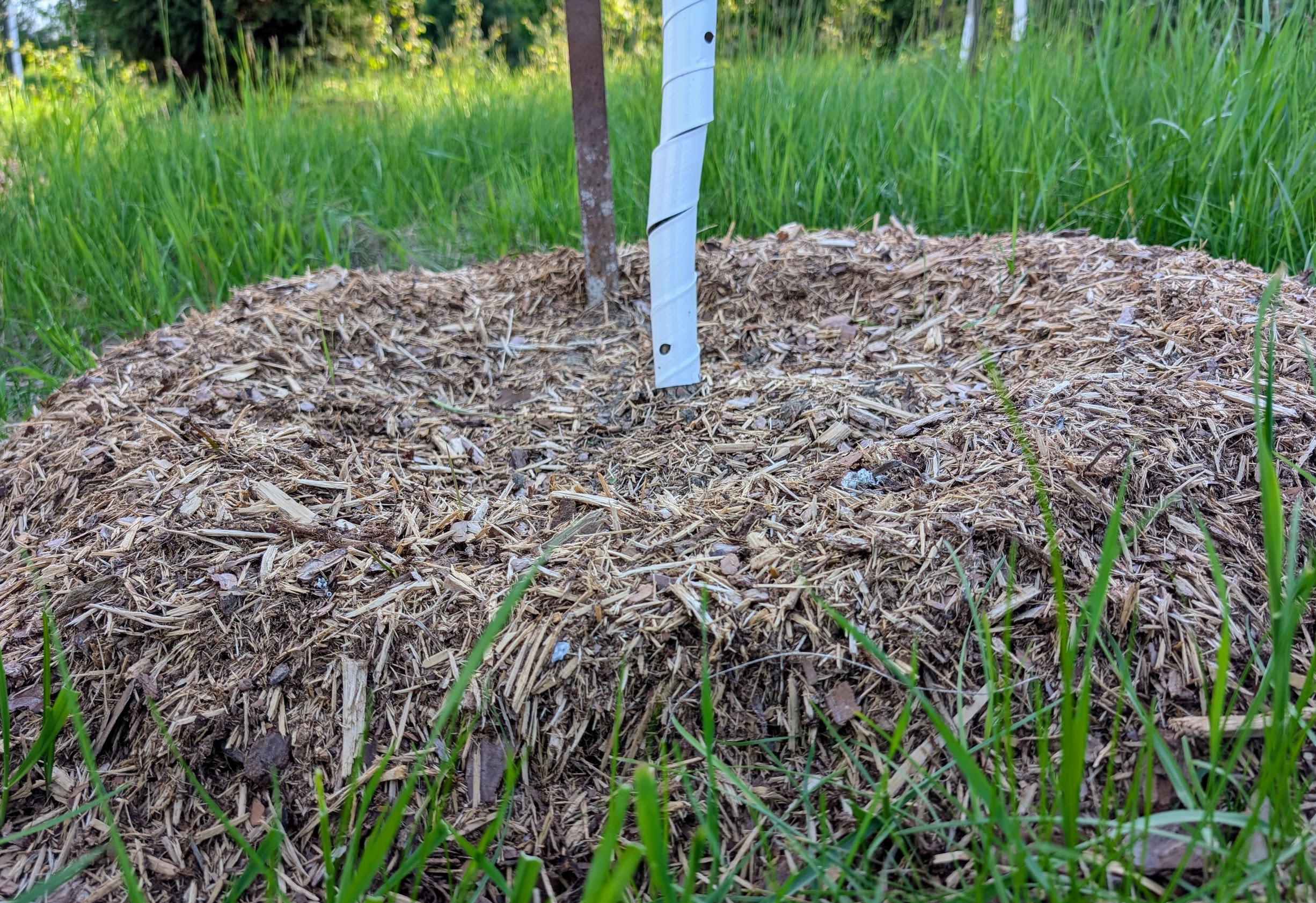
“Once you have planted your trees, you will want to ensure it receives adequate water throughout the summer months, and be careful when using string trimmers and any other garden tools around the tree,” he stated.
“You can utilize mulch to assist with creating a barrier surrounding the tree, but be careful not to ‘volcano’ the mulch around the base of the tree. Best practice is to create a donut 18” to 20” out from the tree.”
Earlier this spring, I witnessed City workers planting a lot of trees in the park near my house (Snider Park), and asked Mayberry about park tree plantings. He shared that the City’s spring tree planting program generally focuses on unmaintained or “green space” locations with available open space and no future park improvement plans for the particular area.
“We try and pick locations with limited or declining tree canopy (mostly due to tree die-off caused by emerald ash borer) or where we can extend an existing tree line or groupings of trees. We had started planting in the north section of Snider Park in 2024, [and] this year’s planting concluded that installation,” he explained.
Indeed, I did notice a plethora of new trees in a different area of the park last year as well.
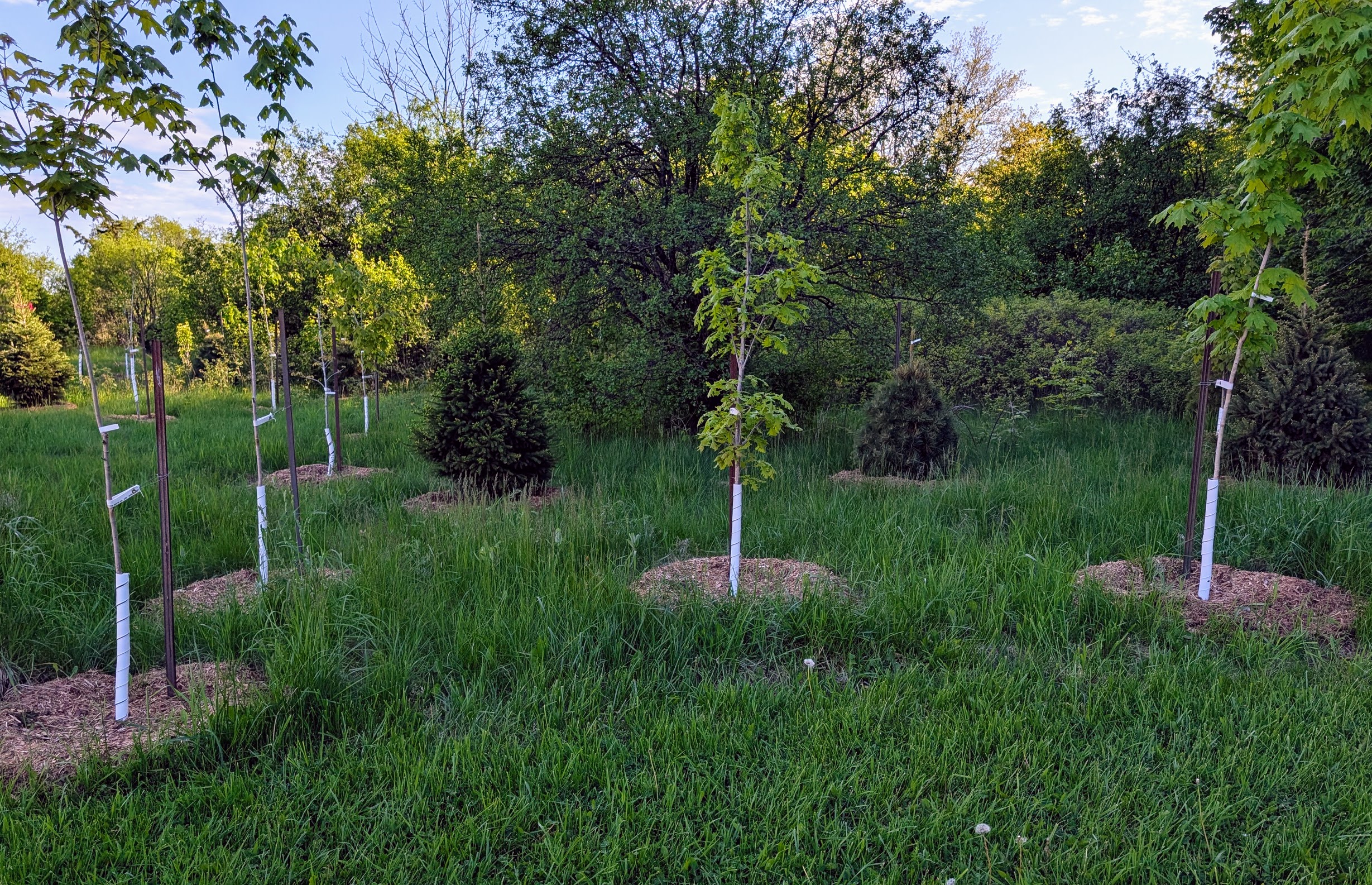
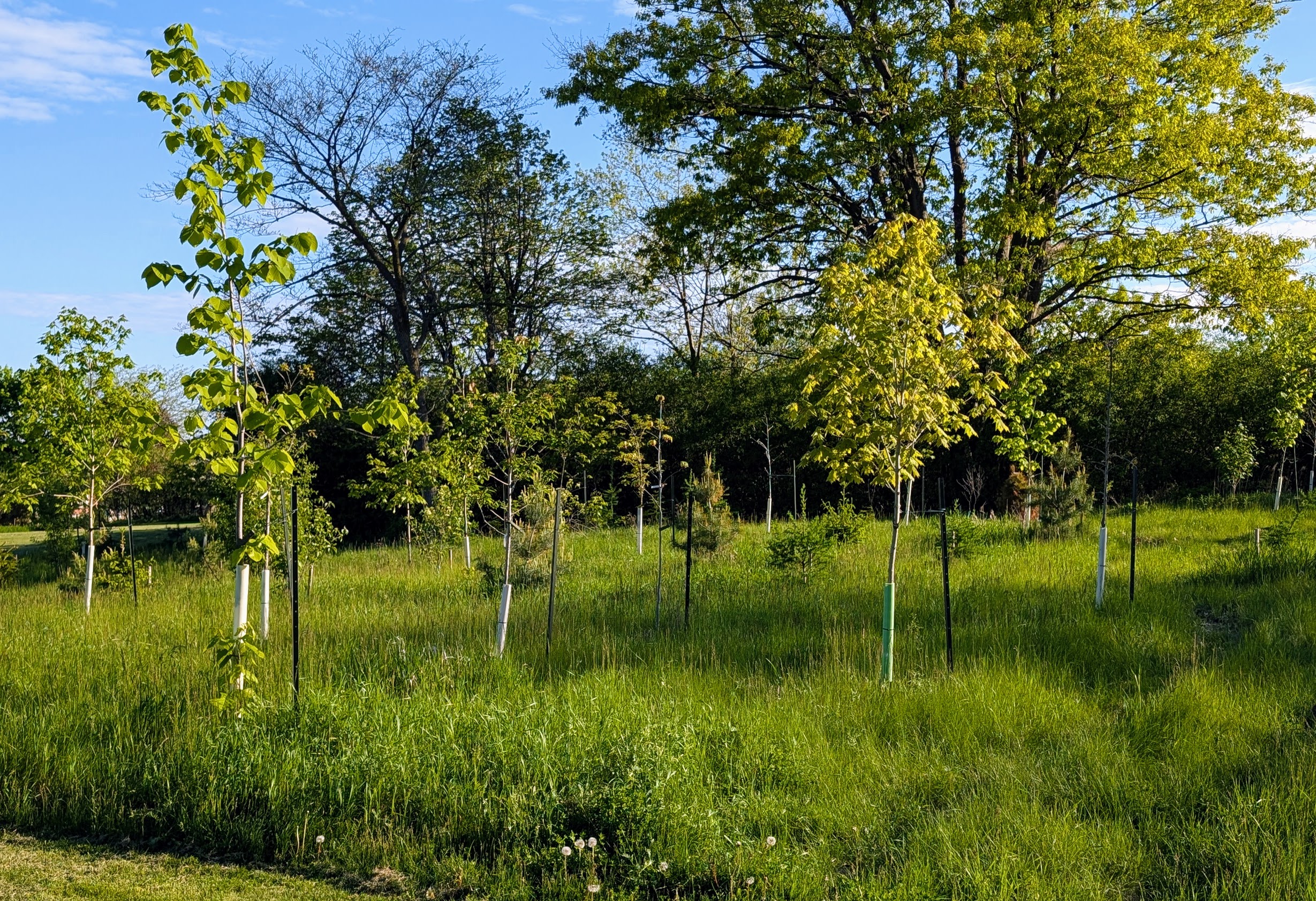
“We do our best efforts to uniformly improve our parks through tree planting every year. This past spring, we focused our efforts on three locations in the central core and three locations in the west end,” Mayberry stated.
Any City of Kingston residents who have tree-related questions regarding city trees, including finding out if the tree in front of a property is within the city’s road allowance, are asked to contact customer service at (613)-546-0000 or by emailing contactus@cityofkingston.ca. Mayberry said that once the service request is created, a tree inspector will be dispatched to investigate and provide details of any work required or ownership details.
Looking for a tree? Mark your calendar — the City has launched the 2026 NTPP spring sale already, and will likely run a second round in the summer, for pick up in September.
To learn more about the City’s work managing trees, biodiversity, and invasive species, visit https://www.cityofkingston.ca/climate-change-and-environment/trees-and-nature/.

