
Editor’s note: I hope to continue to share my writing, though most of my time/energy is spent at Kingstonist. As such, I will be publishing some of my articles here after some time has elapsed from the original publication date. This piece was published on Kingstonist in March 2026.
While Kingston has been operating with the new producer-funded recycling model since the summer of 2025, all communities across Ontario are now part of the province-wide recycling program run by Circular Materials Ontario (CMO).
Circular Materials has contracted Emterra Environmental to collect recyclable materials in the Kingston area as part of the switchover, which took place locally on July 1, 2025. The change was a result of the Ontario government’s Resource Recovery and Circular Economy Act’s Blue Box Regulation, which places full financial, operational, and performance accountability for recycling programs on the producers of recyclable materials.
The full provincial switchover from municipal management to the CMO system took place on Thursday, Jan. 1, 2026, and since then, Circular Materials has expanded the list of materials that can be put at the curb for collection, with one notable removal from the recyclables list.
Alcoholic beverage containers are no longer to be put out with the rest of a household’s recycling.
CMO said that the regulation for Ontario’s new Extended Producer Responsibility (EPR) blue box program specifically excludes the collection of alcohol containers.
“Instead, all alcohol containers should be returned for a refund through the Ontario Deposit Return Program (ODRP). That said, residents’ blue box recycling will still be collected if there are alcohol containers included, but we do ask residents to use the ODRP for alcohol containers,” shared Allen Langdon, CEO of Circular Materials.
Items that can now be recycled as part of the province-wide system include:
- Some aerosol containers: Hairsprays, cosmetics, and products designed to be used on hair/skin, as well as cooking oil sprays and products designed for food
- Toothpaste tubes, deodorant, and hand cream tubes
- Medication bottles
- Crinkly plastic film, overwrap, pet food bags, and bubble wrap (eg: coffee bags or deli pouches, chip bags, snack wrappers, cereal liner bags, plastic gift bags)
- Spiral cans, cookie dough packages, ice cream containers, and hot and cold beverage cups
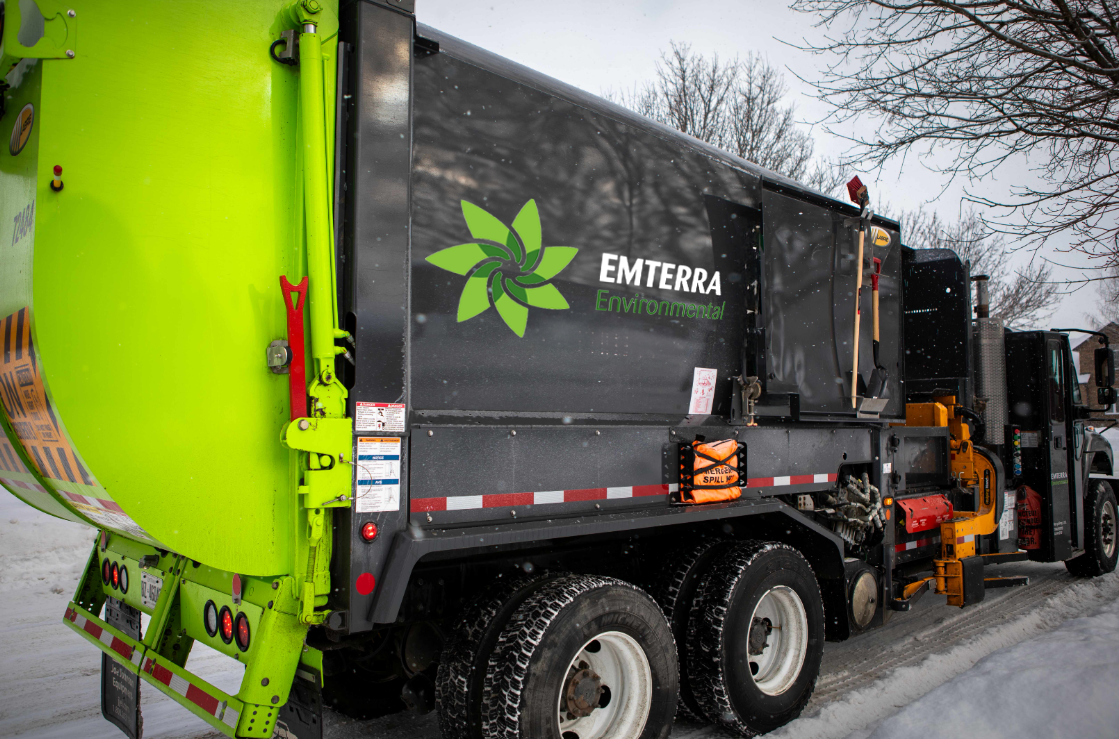
Emterra’s recycling trucks are now a familiar sight in Kingston. Photo via Emterra.
Circular Materials was asked to provide more information on the recycling process and why residents can now recycle more items.
In response, Langdon said that Extended Producer Responsibility is recognized as one of the most effective mechanisms for improving recycling rates.
“It enables innovation, operational efficiencies, increased standard levels and access to materials,” he stated.
“An example of this includes a unified and expanded material list in Ontario that enables residents to recycle more materials, no matter where they live in the province. This provides more consistency for all residents, reduces confusion, and increases the amount of materials being recycled.”
When asked if Circular Materials is seeing a higher quantity of recycled materials as a result of this change, Langdon said that because the province-wide launch only took place on January 1, 2026, data is still being gathered.
“The new unified material list in Ontario makes it easier for residents to recycle, improves recovery rates and benefits both people and the environment,” he stated.
Langdon further detailed that recently, two new facilities opened and are designed to increase overall recycling capacity and support Ontario’s expanded material list.
“These facilities include advanced sorting technologies which allow scanners, analyzers, and optical sorters to communicate with one another as well as technicians, helping improve material quality and system functionality,” he detailed.
“Each facility can process up to 160,000 metric tonnes of material per year and features 19 optical sorters, including units with AI integration, contributing to the modernization of Ontario’s recycling processing infrastructure.”
One of those two facilities is located in the Greater Napanee area, at 2332 County Road 41 in Roblin, the other in Cambridge, Ontario. Circular Materials confirmed that these facilities are not open to the public for recycling drop off.
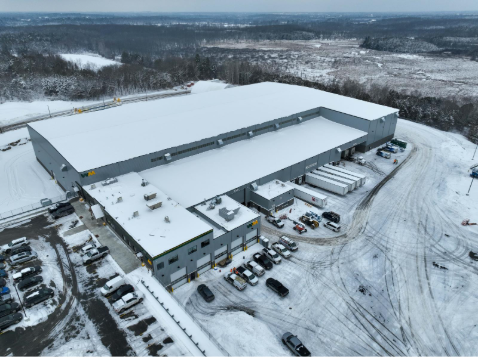
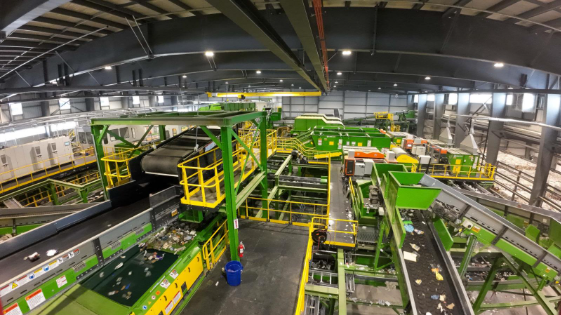
“Each site has created approximately 40 local jobs, for a total of more than 80 positions across both facilities,” the organization shared in a media release about the facilities.
“These advancements help to streamline processes, increase accuracy and efficiency, and enable a strong focus on innovation, safety and material quality that supports a more circular future.”
Despite the increase in items that can now be recycled, the switchover has not been as smooth as Circular Materials suggested in Kingstonist’s previous coverage. In fact, Kingston City Council has called on CMO and Emterra to do a better job picking up blue boxes and ensuring adequate communication with residents.
At their Tuesday, Feb. 17, 2026, meeting, councillors complained that the months have not gone smoothly since the municipality exited the blue box business. The main factor – residents are still calling councillors for help when their recycling has not been collected or they are not getting responses from those who are now responsible for the new system.
When asked about why some Kingston residents are still experiencing delays and poor communication with regard to their recycling, Langdon stated that the Circular Materials team works closely with Emterra “to ensure Kingston residents receive reliable recycling collection service.”
“We continue to respond quickly and work with our service provider to ensure operational issues are addressed, including taking immediate action to resolve missed collections,” he stated.
“Circular Materials is here to listen, act, and deliver a reliable recycling system through strong partnerships, clear operations, and data-backed resident engagement.”
Langdon also noted that Ontario’s new blue box recycling program is 100 per cent funded by producers – the companies that supply packaging and paper products to consumers in Ontario.
“This means municipalities and taxpayers will no longer pay for recycling services as this cost will now be paid by producers,” he explained.
“By shifting financial responsibility to producers, [Extended Producer Responsibility] enables municipalities to redirect their budgets to other local initiatives. Under this new system, Ontario municipalities are collectively saving over $200 million in costs.”
In an interview in June 2025, Karen Santucci, the City of Kingston’s Director of Public Works and Solid Waste, provided details on the costs of recycling collection.
“In 2024, recycling collection and processing cost approximately $4.5 million, with half of that being funded by the province. As the transition occurs in July, it is expected that the costs associated with recycling collection and processing will be about $2.8 million, with half of this being funded by the province,” Santucci outlined at the time.
“In 2026, there will not be any City funding associated with the collection and processing of recyclable materials, unless the City decides to continue or initiate additional programs.”
The City has not made further commitments to running local recycling programs, and closed the Kingston Area Recycling Depot (KARC) on New Year’s Day, citing a lack of funding from Circular Materials as the main reason for the shutdown.
Both the yard waste and household hazardous waste programs are continuing, as detailed in Kingstonist’s coverage here.
Circular Materials detailed that Kingston residents can contact Emterra with any inquiries about their recycling collection at customercareont@emterra.ca, and can also find up-to-date local recycling information at circularmaterials.ca/resident-communities/kingston/.
“We thank Kingston residents for their continued engagement and participation in the recycling program,” Langdon concluded.
“We look forward to building a trusted, resilient recycling system that meets community needs and sets a new standard for Ontario and Canada.”
Find more Kingston-related stories here.
Leave a Reply